SAP End-to-End (E2E) Testing validates a complete business process from start to finish, ensuring the intended business outcome can be achieved across every system, module, integration, user role, and handoff involved.
Unlike transaction or integration testing, E2E testing focuses on the entire business journey rather than individual steps. For example, a Procure-to-Pay process must successfully move from requisition to purchase order, approval, goods receipt, invoice processing, and payment.
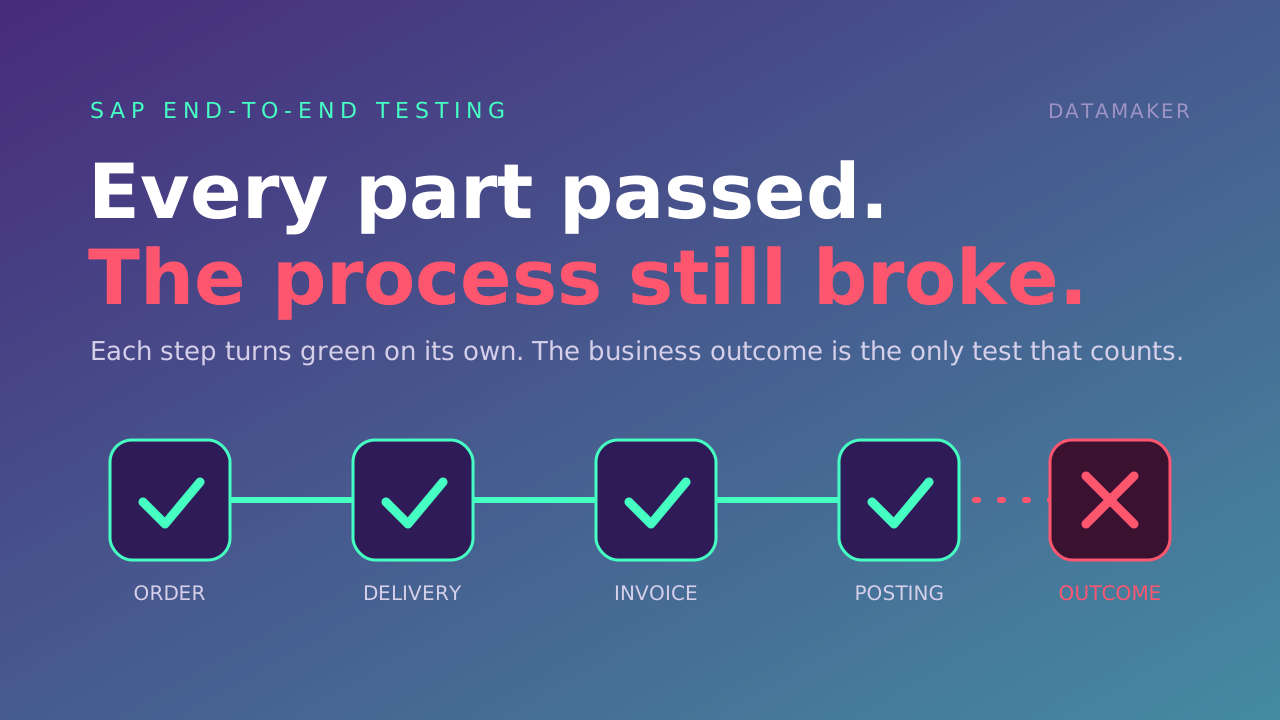
The need for E2E testing became clear when organizations discovered that individual SAP components could work perfectly while the overall process still failed.
A sales order might save correctly, a delivery might be created successfully, and an invoice might generate without errors, yet the customer never receives the product because pricing, inventory, workflows, or integrations break somewhere downstream.
As SAP landscapes become more connected through S/4HANA, Fiori, cloud services, APIs, and third-party applications, these downstream risks continue to grow.
In this guide, we'll explore what SAP end-to-end testing is, why it matters, how it differs from other testing approaches, and how to design effective end-to-end test scenarios for complex SAP environments.
How to design an SAP end-to-end test that actually means something
Step 1: Start with the right business process
Pick a complete business process, not a screen or a feature, and choose it by business risk. Ask which process, if it broke on the first morning after go-live, would do the most damage, and which one has the widest downstream blast radius when it fails.
In practice, most teams do not start from a blank list. They start with the handful of processes the business cannot run without: order-to-cash (can we take orders and get paid), procure-to-pay (can we buy what we need and pay for it), record-to-report (can we close the books), and hire-to-retire (can we pay our people).
These are the first end-to-end candidates almost everywhere, because if any one of them stops, the business stops. From there you extend into the processes specific to your industry and your own history of what tends to break.
Then scope it. Write down where the process starts, where it ends, which systems and modules are in, and what is deliberately out. A test without a clear boundary either balloons or quietly skips the risky middle. (Choosing which processes matter across an entire estate is a bigger exercise that belongs to your overall plan; [the SAP test strategy post] covers that level.)
Step 2: Map the journey forward, every step and every handoff
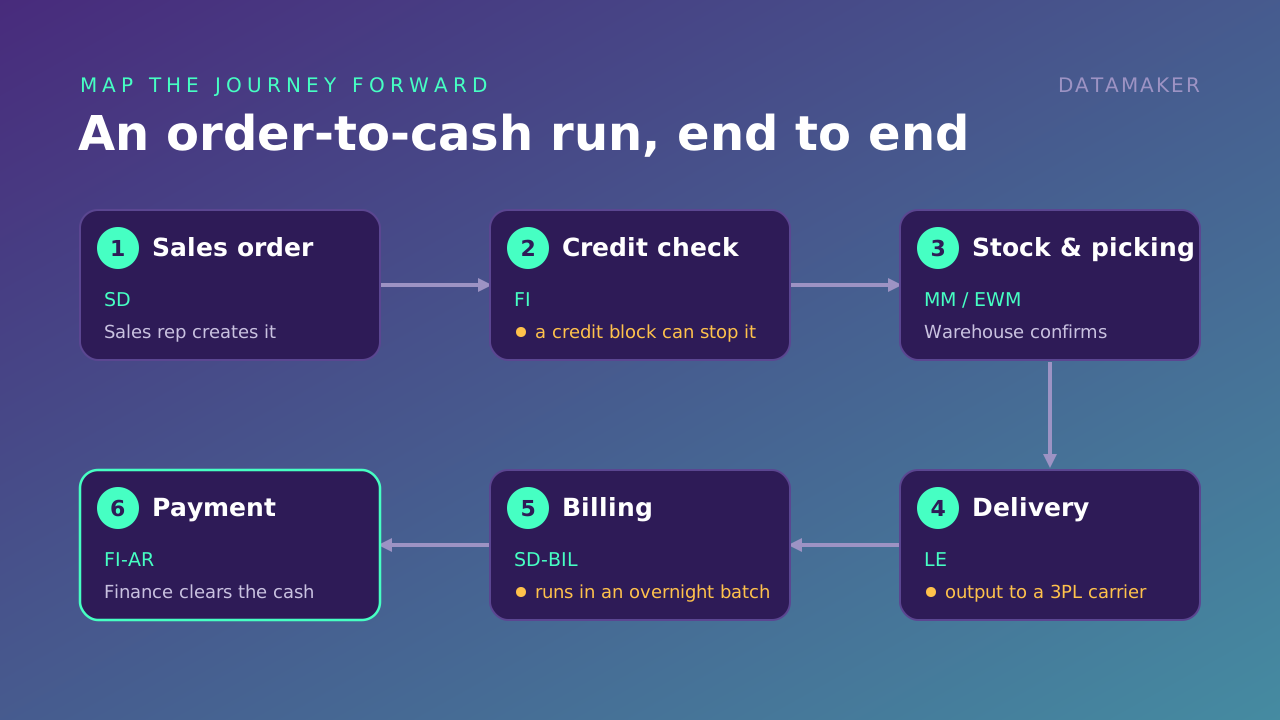
Walk the process the way the business runs it, step by step, naming the system and the role at each step. For order-to-cash that looks roughly like this:
- A sales rep creates the order in SD.
- A credit check runs against the customer's limit in FI.
- The warehouse confirms stock and picks the goods in MM or EWM.
- A delivery posts, and an output goes to a third-party logistics provider.
- Billing generates the invoice.
- Finance posts the receivable, and the payment later clears against it.
Include the unglamorous steps people skip when they demo a process: the overnight batch job, the credit block, the interface to the carrier. Those are where end-to-end runs break, precisely because nobody watches them. This map is your test, and it is only as honest as the steps you were willing to write down.
Step 3: Design the test data backward
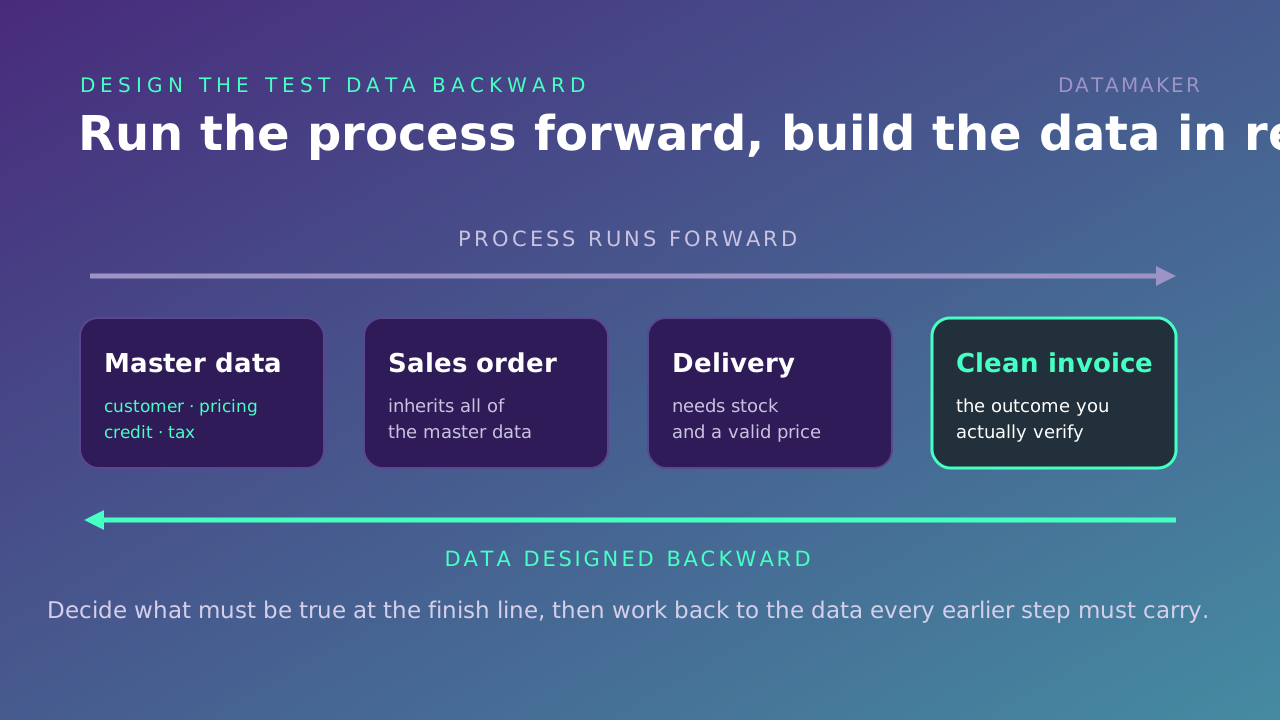
Here is the part that separates a real end-to-end test from a hopeful one. You map the process forward, but you design the data in reverse.
Start from the outcome. Decide what has to be true at the finish line: a correct invoice, a clean FI posting, the right cash applied. Then work backward and ask what data each earlier step needs for that ending to even be possible.
The trap is that in SAP a single record is never just one record. A customer carries pricing conditions, credit segments, partner functions, and tax settings, and a sales order quietly inherits all of it. Copy half of that into your test client and the process dies three steps later when billing cannot find a pricing condition. (This breakdown of SAP test-data dependencies shows how fast that unravels.)
It gets harder once the chain crosses systems. The same customer has to line up in SAP, in CRM, and at the logistics provider, or the handoff between them fails on identity alone. Master data sits at the center of all of this, and master data is exactly what drifts between environments, gets archived, or gets masked inconsistently from one system to the next.
Building a dataset that stays valid through every step of a real business process, across every system that process touches, is genuinely hard. Doing it by hand for each test cycle is where most teams quietly give up and fall back on stale data that no longer matches the process they are testing.
That difficulty is the reason a whole category of SAP test-data tooling exists. DataMaker is one example: it generates schema-valid records and writes them into a test client through SAP's OData services, and it can chain a multi-step set, say a customer followed by orders that reference that customer, so the data holds together across the process instead of breaking at the first seam.
Whatever you reach for, the standard is the same: the data has to survive the whole journey, not just the first step.
Step 4: Decide what "pass" means at each checkpoint
A step completing is not the same as a step being correct. This is the single most expensive misunderstanding in SAP testing.
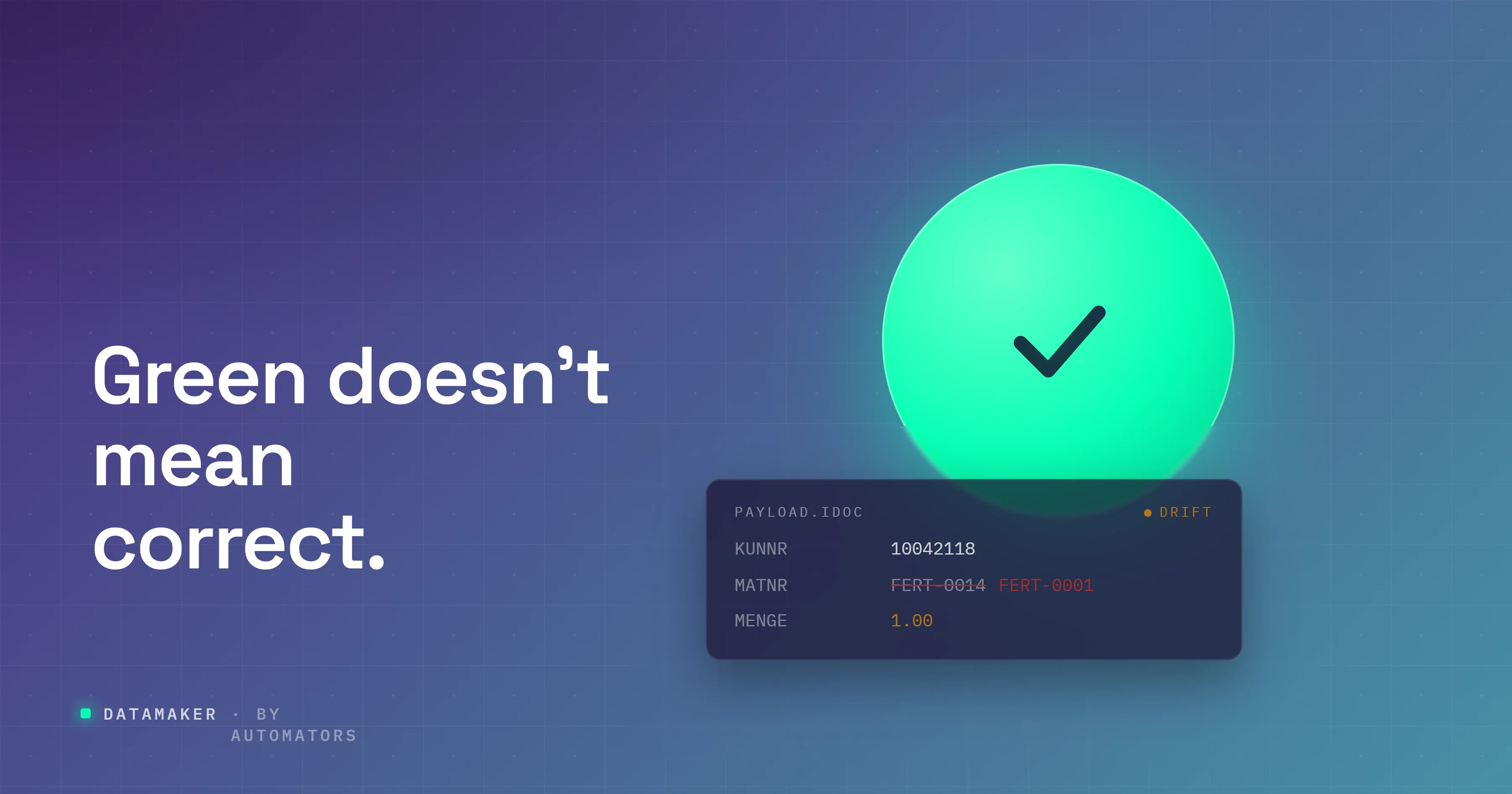
At every checkpoint, open the result and verify the business outcome, not the status message. Did the right quantity actually ship? Does the invoice show the right price and currency? Did finance post to the right account? A run that finishes green with the wrong numbers is worse than a run that fails loudly, because it walks straight into production wearing a passing grade.
How many scenarios is enough?
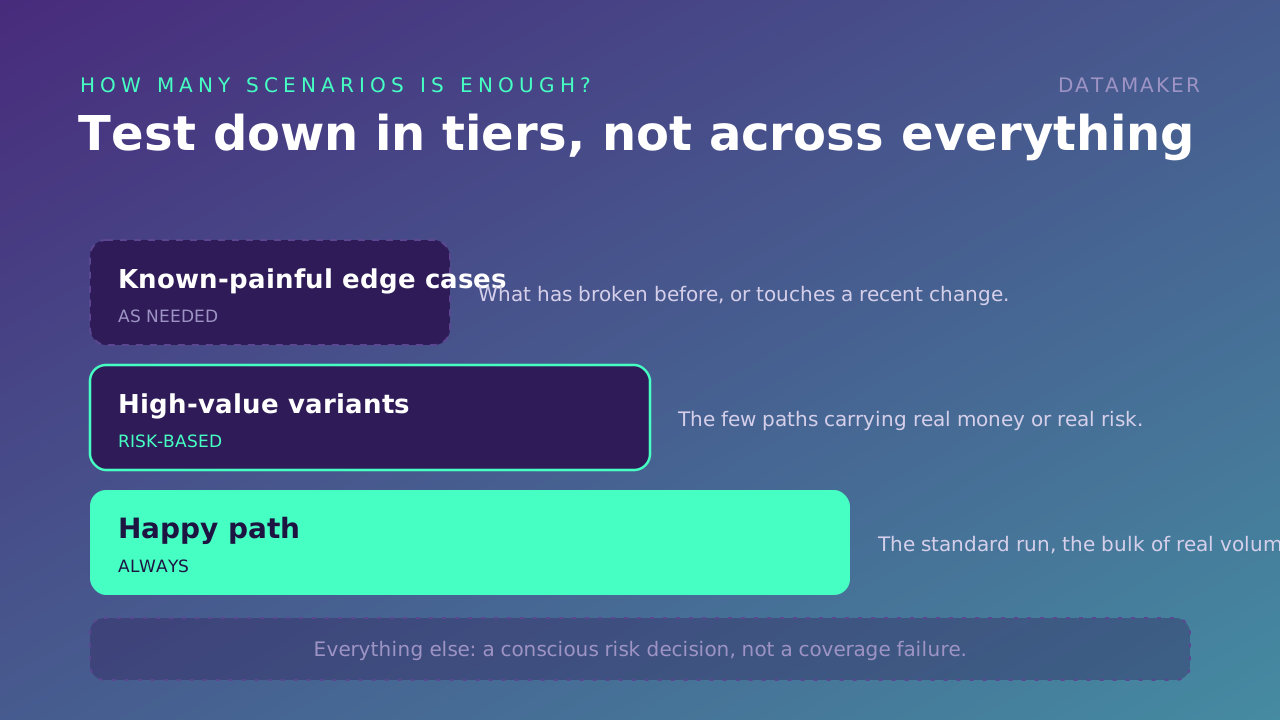
Once a team gets serious about process testing, it hits a wall: there are too many processes, and each one has too many variations. A large enterprise can have hundreds of processes, thousands of variants, multiple countries, and different legal rules. Testing every path is impossible, and pretending otherwise is how schedules collapse.
So the real skill is not testing everything. It is deciding what is enough for one process. A workable approach for a single journey:
- The happy path, always. The standard run that represents the bulk of real volume. If this is not rock solid, nothing else matters.
- The high-value variants. The handful of paths that carry real money or real risk: the export order with different tax handling, the contract customer with special pricing, the drop-ship that skips your warehouse.
- The known-painful edge cases. The ones that have broken before, or that touch a recent change and its downstream blast radius.
Everything past that is a risk decision, not a coverage failure. You are buying down the most expensive risks first and consciously accepting the long tail. Deciding which processes deserve this treatment across the whole estate is the estate-level question, and that is where this connects to overall test strategy rather than living inside one post.
Automating end-to-end tests, and why upgrades make it non-negotiable
Here is the part most executives actually care about. They are rarely interested in automating individual transactions. They want their critical business processes automated, because those processes get tested again and again, forever.
SAP changes constantly. S/4HANA pushes regular release updates, the migration wave onto S/4HANA is moving estates onto new ground, and every transport and enhancement can ripple downstream.
Each of those events means rerunning your end-to-end processes to confirm nothing quietly broke. Doing that by hand, every cycle, for a procure-to-pay journey that spans procurement, approvals, vendor management, inventory, and finance, becomes unaffordable fast.
Automation does not promise perfection. It promises repeatability: the same process, run the same way, every release, without a human clicking through forty steps. That is why a great many SAP automation initiatives are really business-process-testing initiatives wearing a different label.
Tools like SAP's own Test Automation Tool, SAP Cloud ALM, and partner platforms such as Tricentis are built around exactly this, running whole processes rather than isolated screens.
Two things keep automated end-to-end coverage alive over time, and both are easy to neglect:
- Refresh the data, not just the scripts. An automated process is only as good as the data feeding it. Refreshes wipe key records, and a script that passed last month fails because the customer it relied on is gone.
- Update scenarios when the process changes. When the business adds a step or a transport changes a screen, the automated run has to follow, or your coverage slowly becomes fiction that always passes.
The failures only end-to-end testing catches
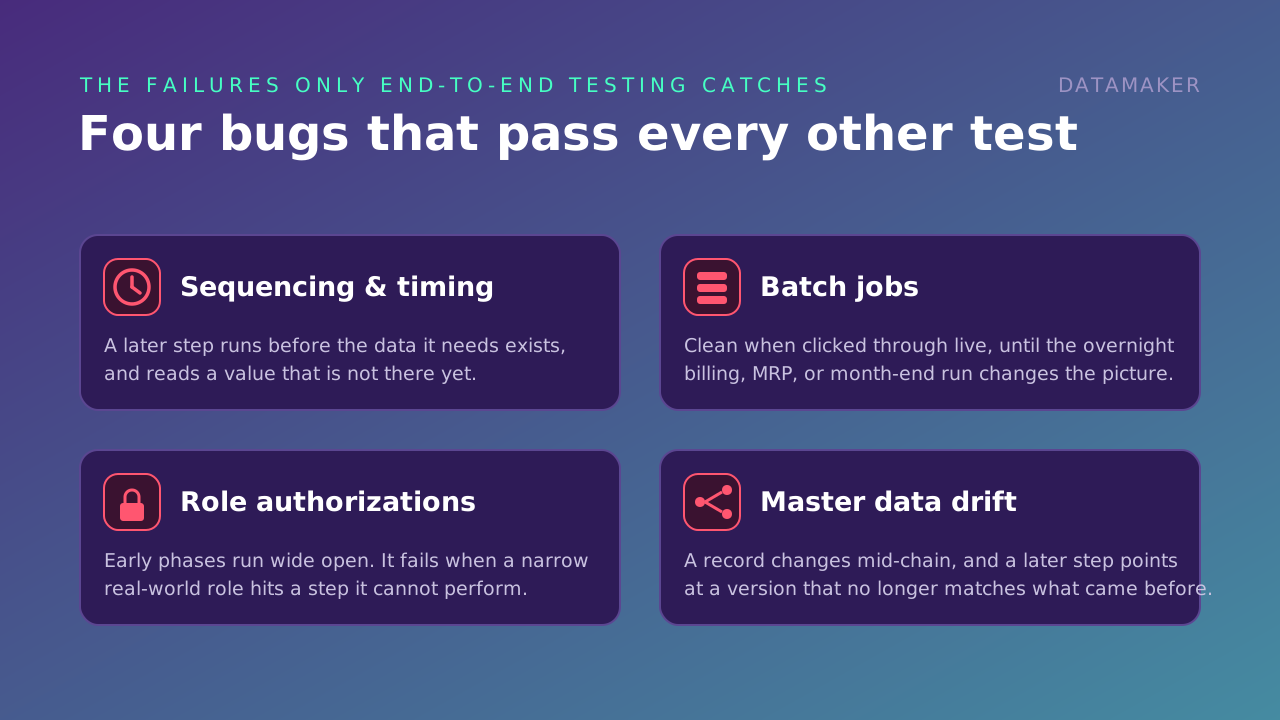
Some defects sail through unit, functional, and integration testing untouched, because each of those layers only ever looks at one piece. The full run is the only place they surface:
- Sequencing and timing. A later step starts before an earlier step's data is ready, so it reads a value that does not exist yet.
- Batch jobs. The process looks clean when you click through it live, then the overnight billing run, MRP, or month-end close changes the picture entirely.
- Role authorizations. Earlier test phases often run with wide-open access. The real process fails when a clerk with a narrow role hits a step their authorization does not allow.
- Master data drift. A record changes partway through the chain, and a downstream step references a version that no longer matches what came before.
None of these are bugs in a single component. They are the downstream-impact failures from earlier, caught in the act. They live in the spaces between components under real conditions, which is the only thing an end-to-end test is built to see.
Why end-to-end testing matters more in modern SAP landscapes
A decade ago, a slow-moving ECC system might have survived on transaction testing alone. That era is closing, and every major shift in the SAP world pushes end-to-end testing from useful to essential.
1. S/4HANA migration is a forcing event:
Mainstream maintenance for SAP ECC ends in 2027, with paid extended support running only to 2030, and by late 2024 fewer than half of ECC customers had moved to S/4HANA.
That leaves a wave of migrations underway right now. A migration is the single largest end-to-end testing event a business will ever face, because every critical process has to be proven again on a new platform, under real conditions, before the business starts depending on it.
2. Fiori changes what the user actually does:
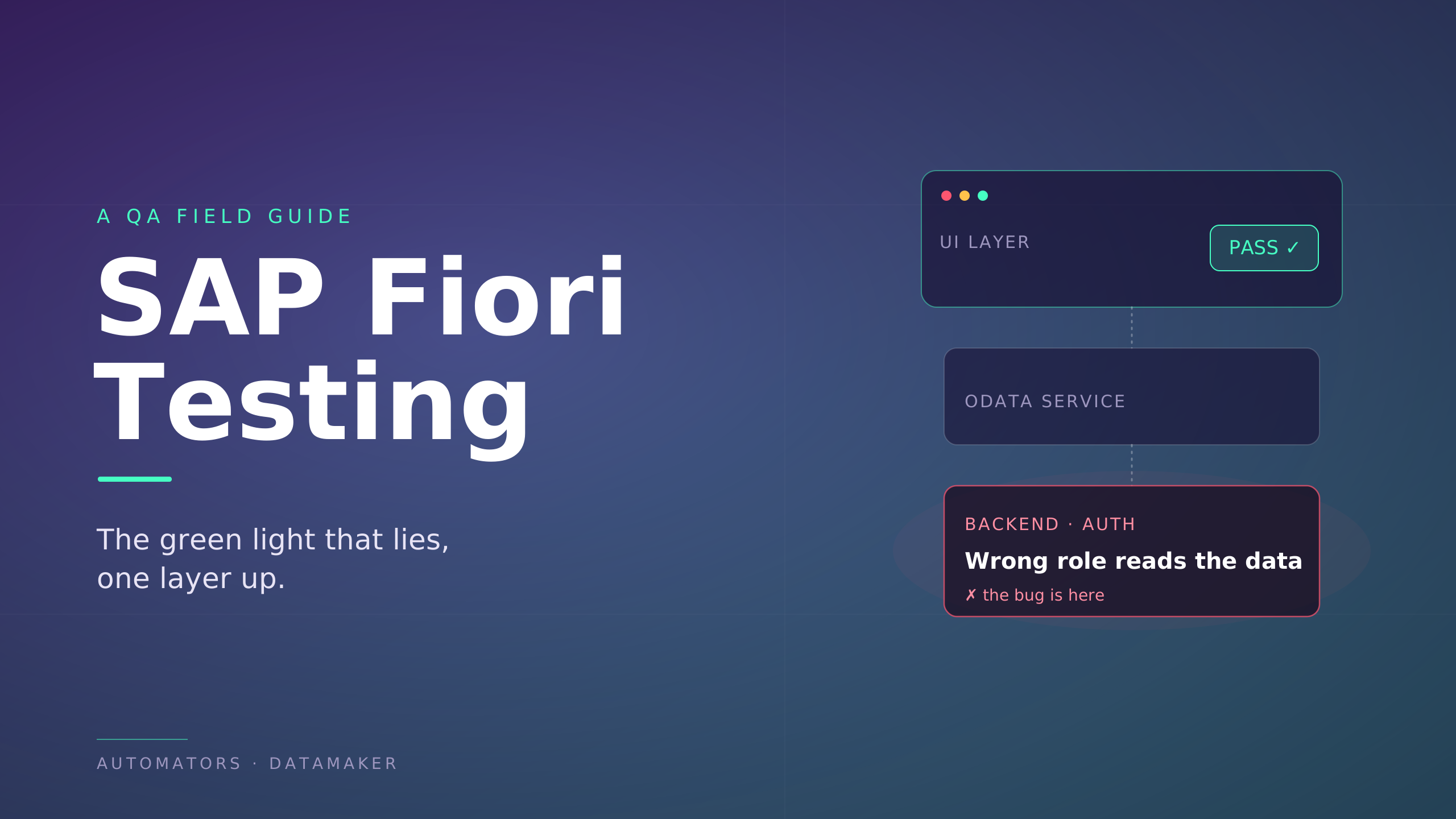
S/4HANA shifts work from classic GUI transactions to role-based Fiori apps running on OData services. A business journey now travels through a UI layer, an API layer, and the backend. Testing the backend transaction alone no longer reflects the path a real user takes, so the end-to-end run has to follow the process across all three.
3. Cloud integration multiplies the seams:
Modern landscapes are hybrid: S/4HANA alongside cloud services such as SuccessFactors and Ariba, plus third parties, stitched together through SAP's Integration Suite and APIs. Every one of those connections is another seam in the process, and a single order-to-cash run may now cross several clouds and company boundaries before it finishes.
4. Release cycles keep accelerating:
Cloud editions update continuously, and even on-premise S/4HANA now ships on a regular release cadence. Each update is a fresh regression risk to live business processes, which is precisely why end-to-end coverage has to be automated rather than rerun by hand every cycle.
5. Custom logic is moving out of the core:
As organizations move custom logic out of SAP and into SAP BTP extensions, business processes become spread across more systems. A process that once ran entirely inside SAP may now span S/4HANA, cloud services, and custom applications. The more systems a single process touches, the more important it is to test the whole chain rather than any one part.
The common thread is simple. Every one of these trends adds distance between where a process starts and where it ends, and raises how often the ground shifts underneath it.
Both make the question end-to-end testing asks harder to answer and more expensive to get wrong. SAP's own learning platform tracks where the technology is heading, and the direction points toward more connected and more frequently changing processes, not fewer.
Final Words
End-to-end testing is the one layer that refuses to take any single green light on faith. It assumes the parts work and asks the only question the business truly cares about: when we run this process the way we actually run it, start to finish, do we get the right result?
It is also why user acceptance testing carries so much weight, since UAT is really end-to-end testing in the hands of the business itself. You answer that question in a test cycle, or you answer it in production. Production is the expensive place to find out.
For the layer directly beneath this one, start with our integration testing guide, then read [the SAP test strategy post] for how every testing type fits into one plan.