If you test SAP for a living, you have probably noticed that every tool you touch suddenly has "AI" stamped on it. Your test management platform writes cases now. Your automation suite repairs its own broken scripts.
SAP's own roadmap talks about autonomous testing and a copilot that resolves issues on its own.
And underneath all the announcements, a quieter question tends to sit there unanswered: how much of this is real, and should you be worried about your job?
This is the honest answer to both. Not the version from a vendor demo, where everything works on the first try and a single prompt replaces a week of work. The version where some of this genuinely changes your day, some of it quietly creates new ways to ship a bug, and the part of the job that actually mattered turns out to be the part AI is worst at.
Let's start with what's real, because a lot of it is.
What AI Actually Does in SAP Testing Right Now
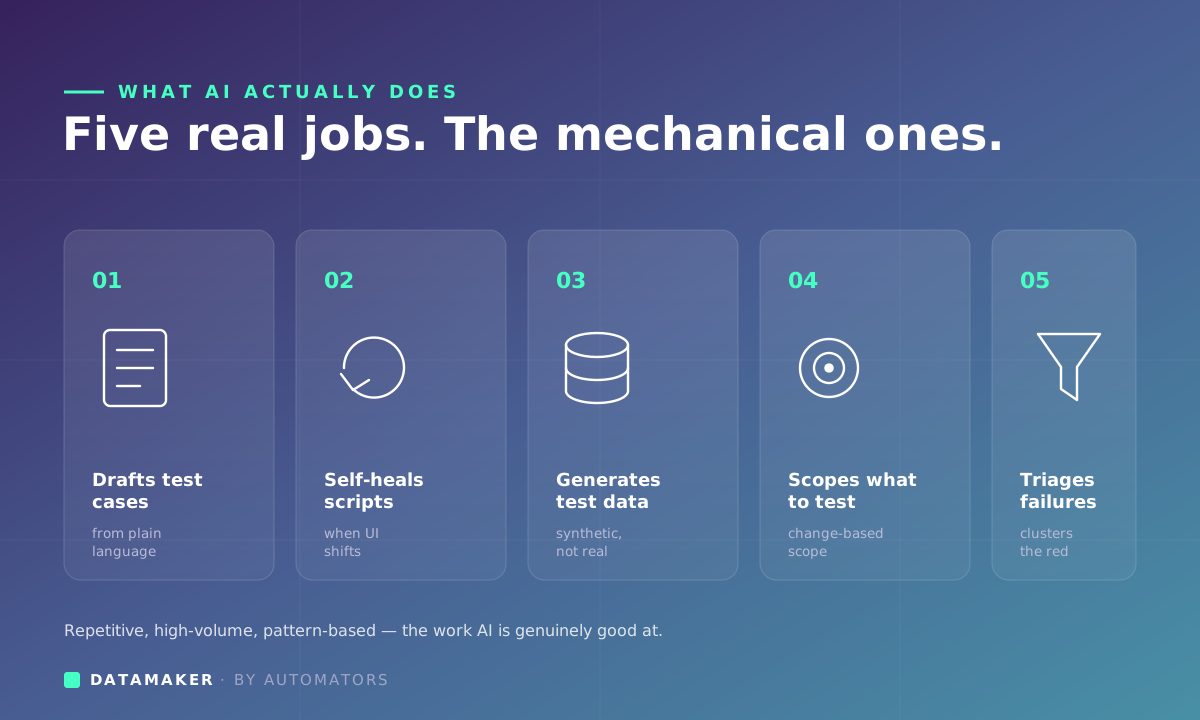
Strip away the marketing, and AI is doing five concrete things in SAP testing today. None of them are science fiction. Most of them are shipping in tools you may already have access to.
1. It writes a first draft of your test cases.
In May 2026, SAP and Tricentis added AI-assisted test case generation directly inside SAP Enterprise Continuous Testing, where you describe a test in plain language and it builds an automated case using SAP AI Units, without leaving your SAP workflow.
Test management platforms like aqua have done a version of this for a while, generating SAP-specific cases from requirements using domain-trained models. The honest framing: it gets you to a reviewable draft fast. It does not get you to a finished, trustworthy test on its own.
2. It repairs scripts when the UI shifts:
This is "self-healing," and for SAP it matters more than almost anywhere else, because S/4HANA migrations and frequent cloud updates break locators constantly.
Tools like Tricentis, ACCELQ, and Worksoft detect when a field or button moves and update the script's reference automatically, so a test that would have failed on a cosmetic change keeps running.
For large regression suites grinding through hundreds of end-to-end scenarios, this removes a real and tedious maintenance burden.
3. It generates test data on demand:
Provisioning realistic SAP test data has always been a bottleneck, and it is genuinely expensive to do the old way: copy production, mask the sensitive fields, hope nothing breaks referential integrity across all those interconnected tables.
AI-driven data tooling generates synthetic data instead, designed to mirror production patterns without ever touching real records.
IBM's WatsonX tooling, GenRocket, and K2View all work in this space, as does DataMaker, which connects through SAP's OData services to both pull real records and write synthetic ones back.
These tools differ in scope; some are full enterprise data-management platforms, others are lighter and automation-focused, but the shared idea is the same: stop hand-building test data and stop copying production to get it.
4. It scopes what to test.
Instead of re-running everything after every change, AI-driven scoping looks at what actually changed in code or configuration and narrows the test set to what that change can plausibly affect.
SAP's Intelligent Test Scoper does exactly this inside the S/4HANA Cloud test automation tooling, optimizing scope based on the changes in a release. Done well, this is the difference between regression testing that is focused and regression testing that is merely exhaustive.
5. It triages and explains failures:
When a run produces a wall of red, AI can cluster failures, flag the highest-risk areas based on historical defect patterns, and turn raw logs into a report that points at probable causes rather than just listing what broke.
If you put those five together, the pattern is clear. AI is good at the parts of testing that are repetitive, high-volume, and pattern-based: drafting, maintaining, provisioning, scoping, summarizing.
That is real value, and it is the reason the SAP press has shifted from "automating clicks" to "AI-assisted quality" over the past year.
So far, so good. Now the other half.
Where the Hype Outruns Reality: Things You Need to Know
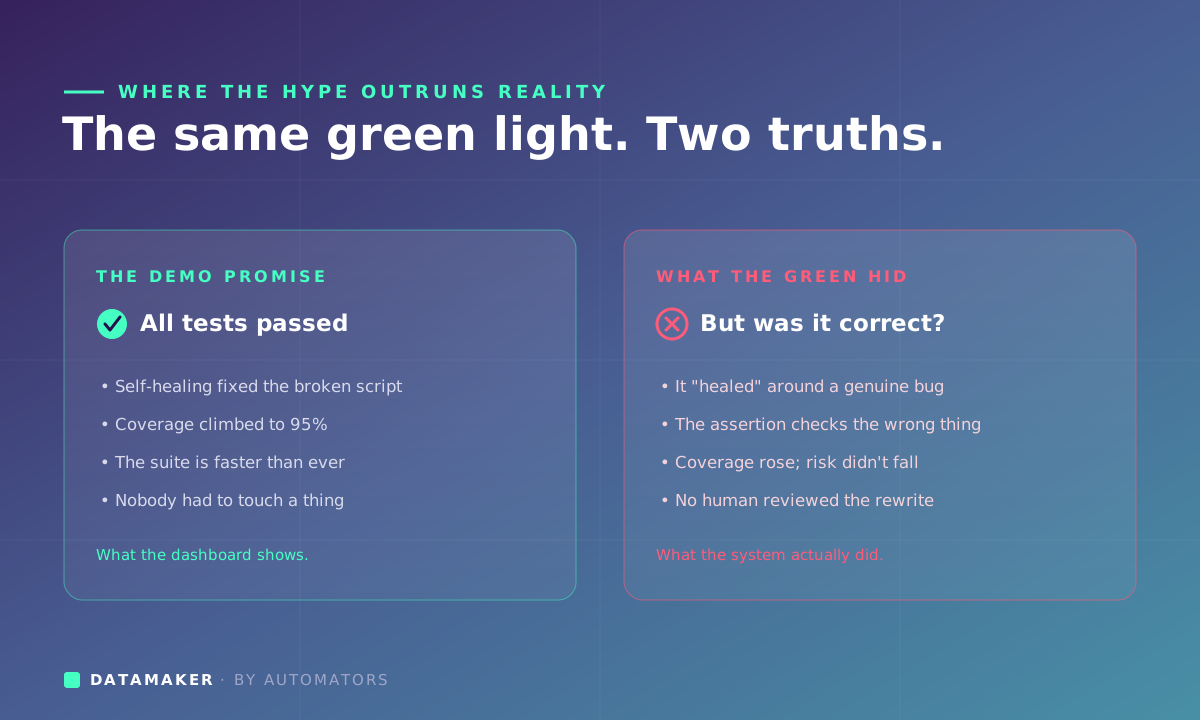
Here is the part the demos skip.
1. Self-healing can heal around a real bug:
Think about what self-healing actually does: a test fails, the AI looks for a similar element, finds one, swaps it in, and the test goes green. That is wonderful when the failure was a renamed button.
It is dangerous when the failure was the application genuinely changing in a way that should have stopped the test.
A test breaking on a well-written check is a signal that something moved. Self-healing can quietly erase that signal and report success over the top of it.
One critical engineering analysis put it bluntly: aggressive self-healing obscures whether the application itself changed in a meaningful way, and the failures it papers over are sometimes the ones you most needed to see.
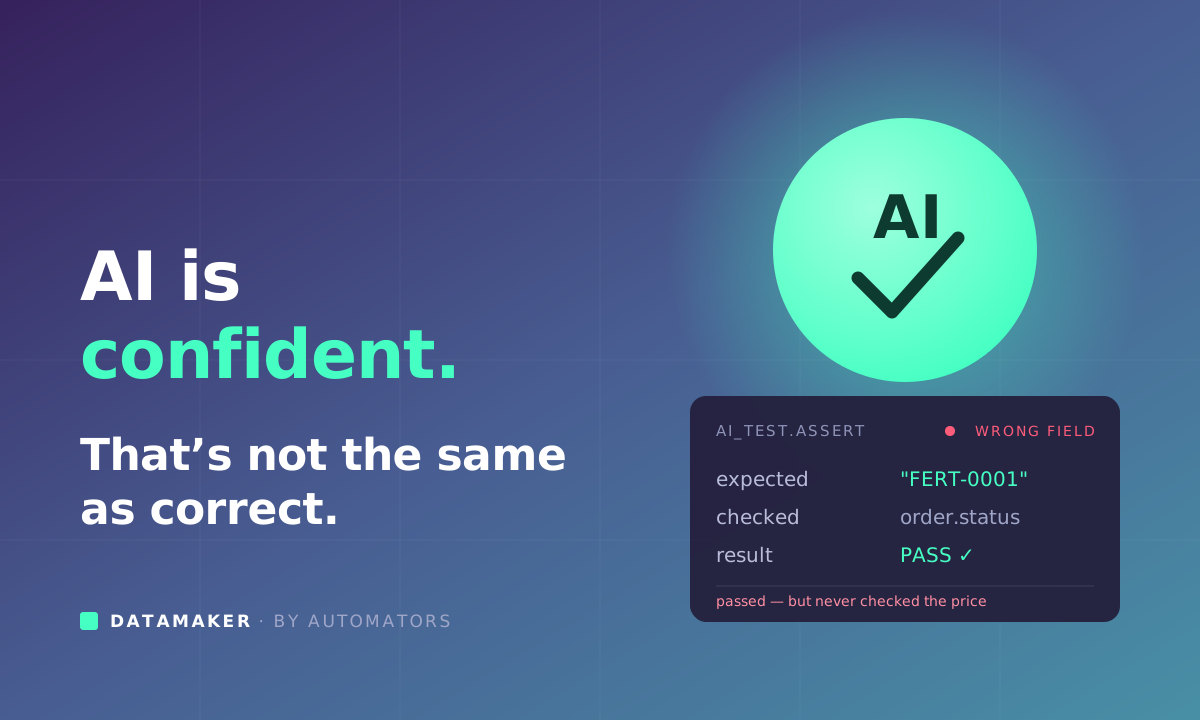
2. AI can write confident, wrong tests:
A language model asked to generate a test will happily produce one for behavior your SAP system does not actually implement, or one whose assertion looks reasonable and checks the wrong thing.
It will not hesitate. It will not flag its own uncertainty. The test will sit in your suite passing reliably and proving nothing, which is arguably worse than a test that fails, because a failing test at least gets looked at.
3. Green dashboards manufacture false confidence:
This is the failure mode that scales. When AI generates the tests, heals the tests, and reports on the tests, it becomes very easy to watch coverage and pass-rate numbers climb while actual risk sits untouched.
Analyses of enterprise rollouts in 2026 keep landing on the same warning: measuring automation activity instead of risk reduction creates false confidence, and tools that shine in a pilot often struggle once they hit a complex, regulated SAP landscape.
Some critical reviews of self-healing at scale have reported it increasing false positives and debugging time rather than reducing them, the opposite of the promise, though those figures come from vendors with a stake in the argument and are worth treating as a caution rather than a settled number.
4. Opaque decisions are a problem in an audited system:
SAP processes are frequently the ones auditors care about most. When an AI flags a test as high-risk or quietly rewrites it and cannot explain why, you have a tool you cannot defend in a compliance review. "The model decided" is not an answer a finance or pharma audit accepts.
The teams that adopt AI testing successfully in regulated SAP environments tend to be the ones that insist on confidence scores and traceable reasoning, not silent automation.
None of this means AI testing is a con. It means AI is powerful exactly where the work is mechanical, and unreliable exactly where the work requires judgment. Which, if you have read the rest of this series, should sound familiar.
The AI Hype is not New: You've Seen this Trap Before
This whole series has circled one idea, and AI just brought it back wearing a new outfit.
A green signal is a claim about one specific thing. It is not proof that the system is correct.
In the integration testing post, that was status 53: the message posted, the screen went green, and the price on the resulting document was still wrong. The status code told the truth about delivery and said nothing about accuracy, and the entire skill of integration testing was learning to tell those two apart.
A self-healing "pass" is the same shape of claim, one level up. It tells you the test executed and found something to interact with. It does not tell you the behavior was right. An AI-generated test that passes tells you the assertion it happened to write came back true. It does not tell you the assertion was the one that mattered.
The trap has not changed. The floor under it has just been raised, because now there is a layer of automation between you and the thing being tested, and that layer is fluent, fast, and confident.
The more of your testing AI runs, the easier it becomes to trust the color of the light instead of the state of the system. That is the exact reflex this series keeps telling you to resist.
Things to Note: What Changes for You, and for Your Team
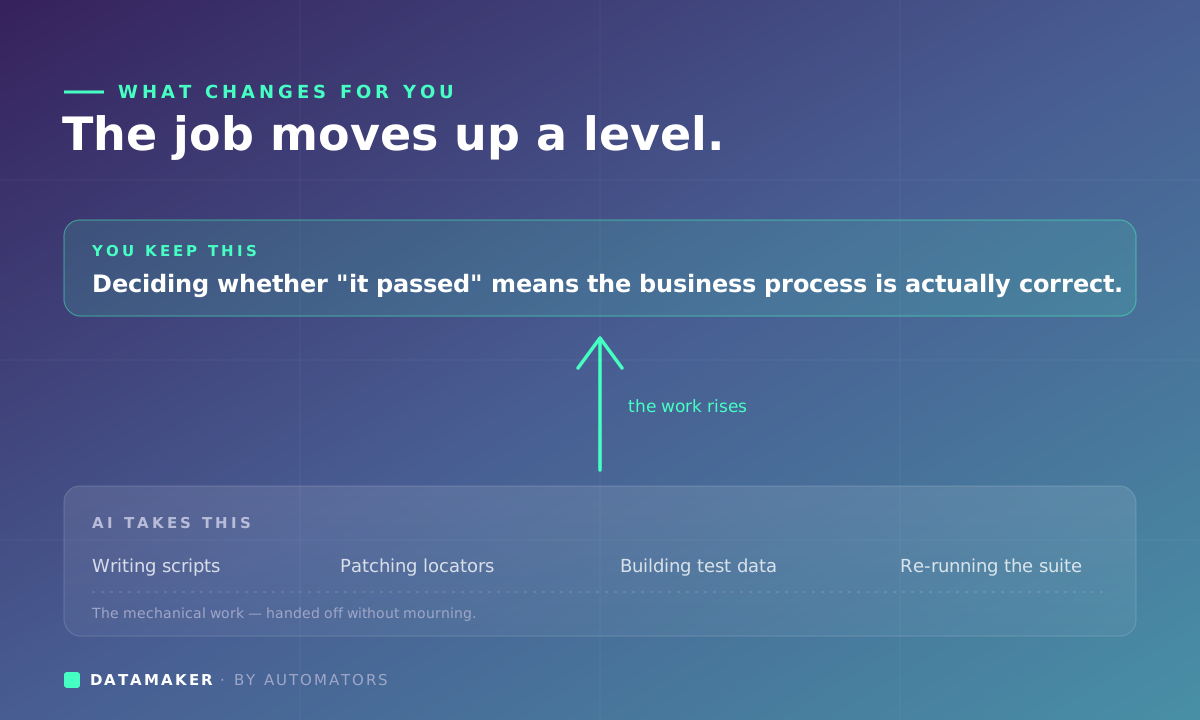
So back to the worried tester. Is the job going away?
The mechanical parts of it are, and you should let them go without mourning. Hand-writing every regression script, manually patching locators after every UI tweak, building test data by hand, re-running the full suite because deciding what to skip felt risky: that work is being automated, and it was never the valuable part.
What is left is the part that was always the job. Deciding what to test and why. Knowing that an order-to-cash flow can pass every screen and still be wrong in a way no generated assertion would catch. Looking at a green run and asking whether "it passed" actually means the business process is correct.
AI does not do that. AI produces the green; a tester decides whether the green is trustworthy. As AI runs more of the pipeline, that judgment becomes more valuable, not less, because it is the only thing standing between a confident dashboard and a production incident.
If you lead a team, the same split tells you where to point AI and where to hold the line. Point it at the drudgery: data provisioning, first-draft authoring, locator maintenance, failure triage.
That is where it pays for itself quickly. Keep humans firmly in the loop on the things AI is structurally bad at: final correctness sign-off, anything touching compliance or audit, and the policy decision of what a self-healing tool is allowed to change silently versus what it must escalate. The cheapest mistake here is letting the tool both do the work and grade it.
And this gets bigger, fast. Everything above is about AI helping you test SAP. The next wave is AI running inside SAP: at Sapphire 2026, SAP put agents at the center of its roadmap, with hundreds already announced across HR, finance, procurement, and supply chain, and its own materials pointing toward an ecosystem of far more to come.
Each of those agents is a piece of software that makes decisions inside a mission-critical process, which means each one is something that has to be tested before it goes anywhere near production. SAP's CEO framed the stakes himself, noting that for mission-critical processes, "almost right" is not good enough.
Sit with that for a second. When there were dozens of agents you could imagine reviewing them by hand. When there are thousands, every one capable of being confidently and silently wrong, verification stops being a task and becomes the bottleneck the whole autonomous enterprise runs through.
The tester who can judge whether an agent's output is actually correct, not just whether it ran, is not being automated out of a job. That tester is becoming the load-bearing wall.
How You Can Actually Start, Honestly
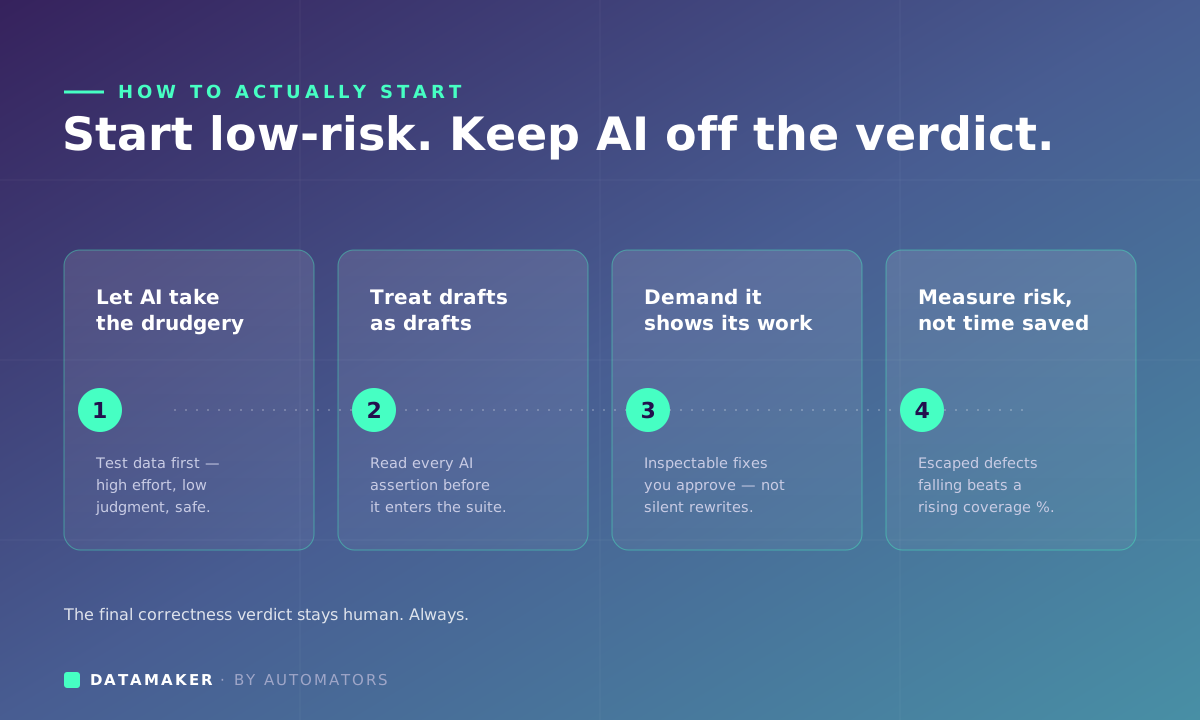
If you want to bring AI into your SAP testing without setting a trap for yourself, start small and start where the risk is lowest.
Begin with test data. It is the highest-drudgery, lowest-judgment task in the list, which makes it the safest place to let AI take real load off you, and synthetic data also gets you out of the compliance hole of copying production. From there, let AI draft test cases, but treat every draft as a draft. Read the assertion before it enters your suite, the same way you would review a junior tester's first pass.
When you turn on self-healing, demand that it show its work. A tool that proposes an inspectable change you approve is an assistant. A tool that silently rewrites your tests and tells you everything is fine is a liability. If your platform offers confidence scores and a reasoning trail, use them, especially on anything an auditor might ask about later.
And change what you measure. Time saved and coverage percentage are the numbers vendors love because they always go up. The number that matters is whether you are actually catching the failures that would have reached production. If your automation activity is soaring and your escaped-defect rate is not falling, the AI is making you feel faster, not safer.
Be honest, too, about what you can adopt alone versus what is a team decision. A single tester can start generating test data and reviewing AI-drafted cases tomorrow. Turning on self-healing across a shared regression suite, or wiring AI scoping into a release pipeline, is a tooling and governance choice that needs the people who own those systems in the room.
The job that doesn't go away
AI is changing the texture of SAP testing, and the change is real. Less manual scripting, less data wrangling, less of the repetitive maintenance that ate your week. That is genuinely good, and pretending otherwise would be its own kind of dishonesty.
What it does not change is the purpose. Someone still has to decide whether "it passed" means the business is actually right, and that someone has to understand the system well enough to know when a confident green light is lying.
SAP has spent this whole series teaching you to distrust the easy signal and verify the thing that matters. AI did not retire that instinct. It made it the most important thing you bring to the table.