The strategy was signed off before the project even started. Scope, quality gates, defect workflow, entry and exit criteria, all approved. Then a finance process nobody had flagged broke in regression two weeks before go-live, the fix touched three interfaces, and the date moved.
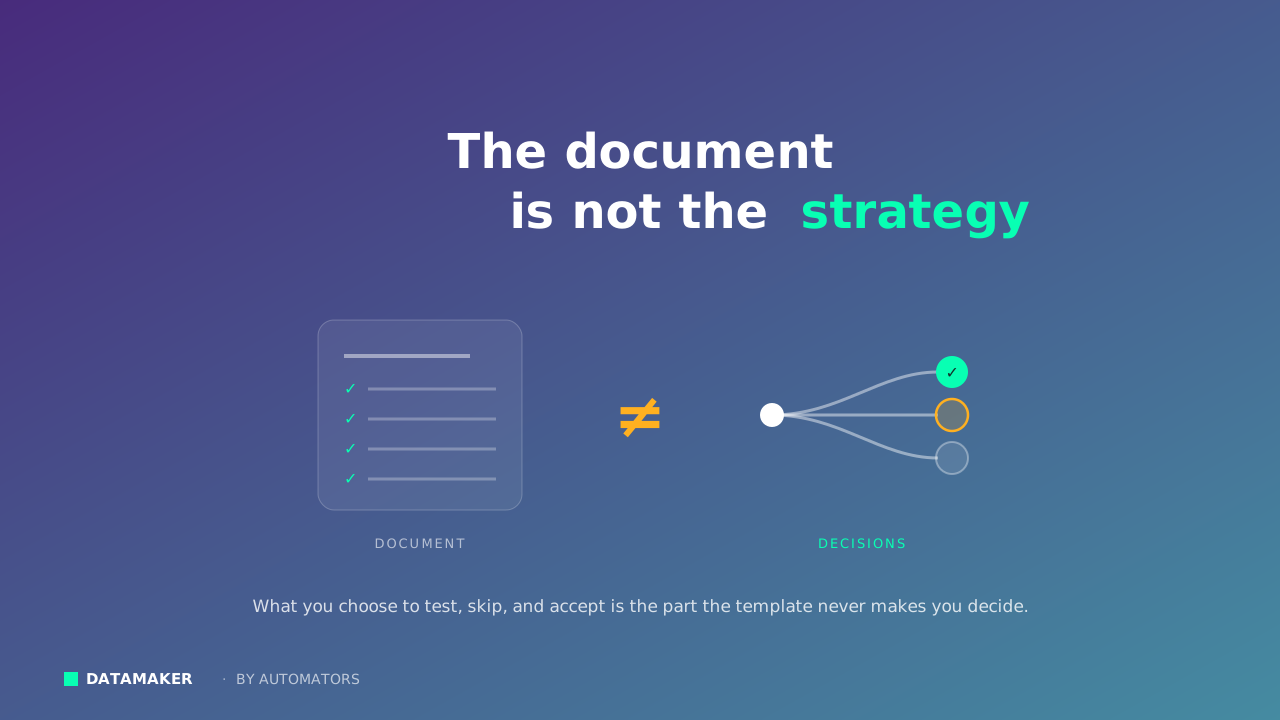
The document was fine. The strategy was the problem.
Most SAP test strategy advice is really about writing a document: which sections to include, who signs it. But you can fill every box and still miss the decisions that decide what your testing actually catches.
Underneath them sits one question: given the time and budget you actually have, what is the least testing that gets you to a level of business risk you can live with?
Why an SAP Test Strategy Is Different
Generic testing advice falls apart in SAP for reasons specific to the platform, and a strategy that ignores them is a strategy on paper only.
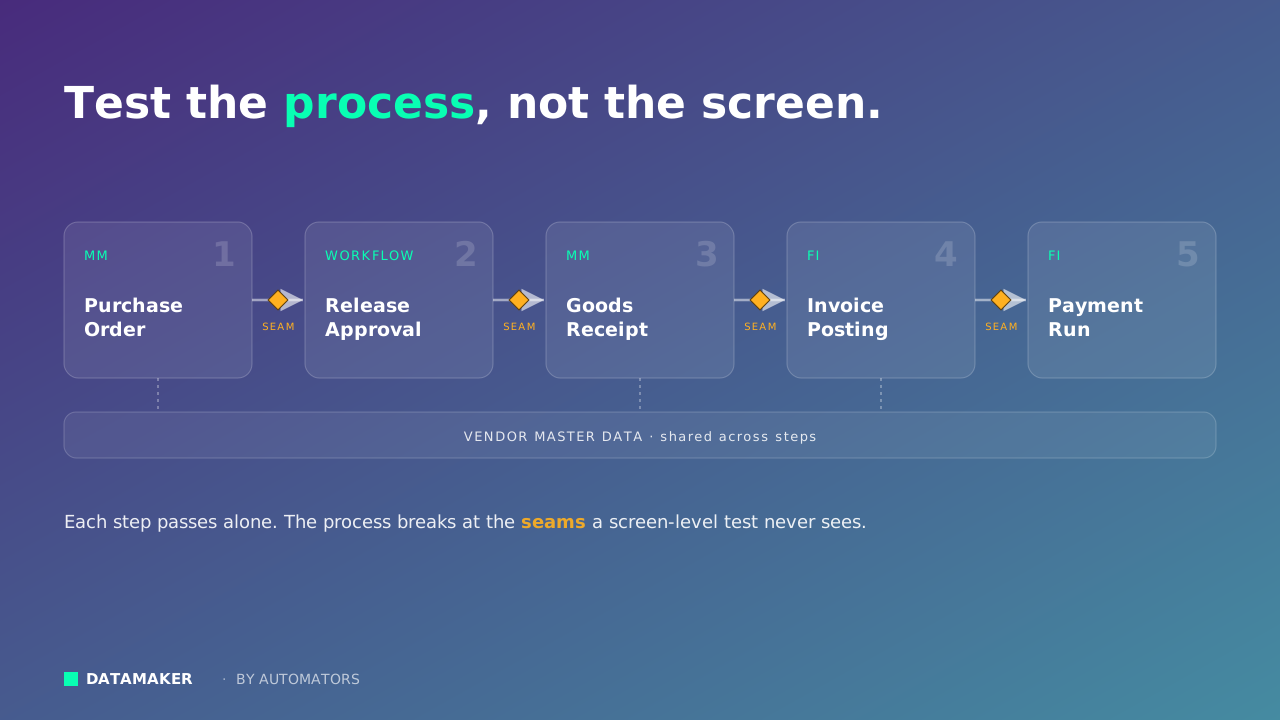
Start with how the work is shaped. A single business process in SAP rarely lives in one place. A procure-to-pay flow can move through MM for the purchase order, FI for the posting, a release-approval workflow, vendor master data, a custom enhancement or two, and a Fiori app on top before it is done.
Test any one of those pieces in isolation and it passes. The process still breaks at the seams between them. That interconnection is the core reason SAP teams gave up on transaction-level testing and reorganized around whole business processes.
Then there is age and change. SAP systems are long-lived, heavily customized, and upgrade-heavy, so the strategy is never written once. It gets reopened by every support pack, enhancement pack, and migration.
The biggest of those is bearing down right now: ECC mainstream maintenance ends on December 31, 2027, S/4HANA migrations typically run 18 to 36 months, and many teams have not started. The next two years will be the heaviest testing load most SAP organizations have ever carried, on the tightest clock. The strategy is what decides whether that load is survivable.
Build Your SAP Test Strategy in 7 Steps
Step 1: Decide what "enough" actually means
Before scope, before tools, before a single test case, settle the goal. Most teams never say it out loud, which is how they end up chasing the wrong target.
There are really only two targets on offer. One is coverage: test as much as possible, on the theory that more testing means less risk. The other is risk reduction: test the things whose failure would hurt most, and accept that the rest goes lightly tested or untested. They sound similar. They produce completely different projects.
The coverage instinct feels responsible, and a decade ago plenty of SAP programs ran on it. It collapsed under its own weight. Testing everything in a landscape with thousands of transactions, hundreds of interfaces, and custom code in every corner is too slow, too expensive, and impossible to keep up release after release.
The teams that absorbed that lesson stopped asking "how do we test all of it" and started asking "where would a failure actually cost us something." That shift, from coverage to risk, is the single clearest line between a mature SAP testing function and one that is drowning.
So "enough" is not a coverage percentage. Enough is the point where the risk that remains is risk the business has looked at and agreed to carry. Name that target first. Everything after this is just how you reach it.
Step 2: Scope around business processes, not transactions
Once the goal is risk reduction, the next decision is what unit you reason about. Because SAP processes span modules the way the last section described, the only unit that reflects real risk is the end-to-end process, not the transaction.
The trap is scoping by transaction or by screen, because that is how the system is built and how testers are trained to think. But nobody runs a business on transactions. A CFO does not ask whether ME21N was tested. They ask whether the company can still buy materials, close the books, and pay people.
The question worth scoping around is not "do these screens work" but "does the order a customer placed turn into a shipment, an invoice, and a correctly posted payment, all the way through."
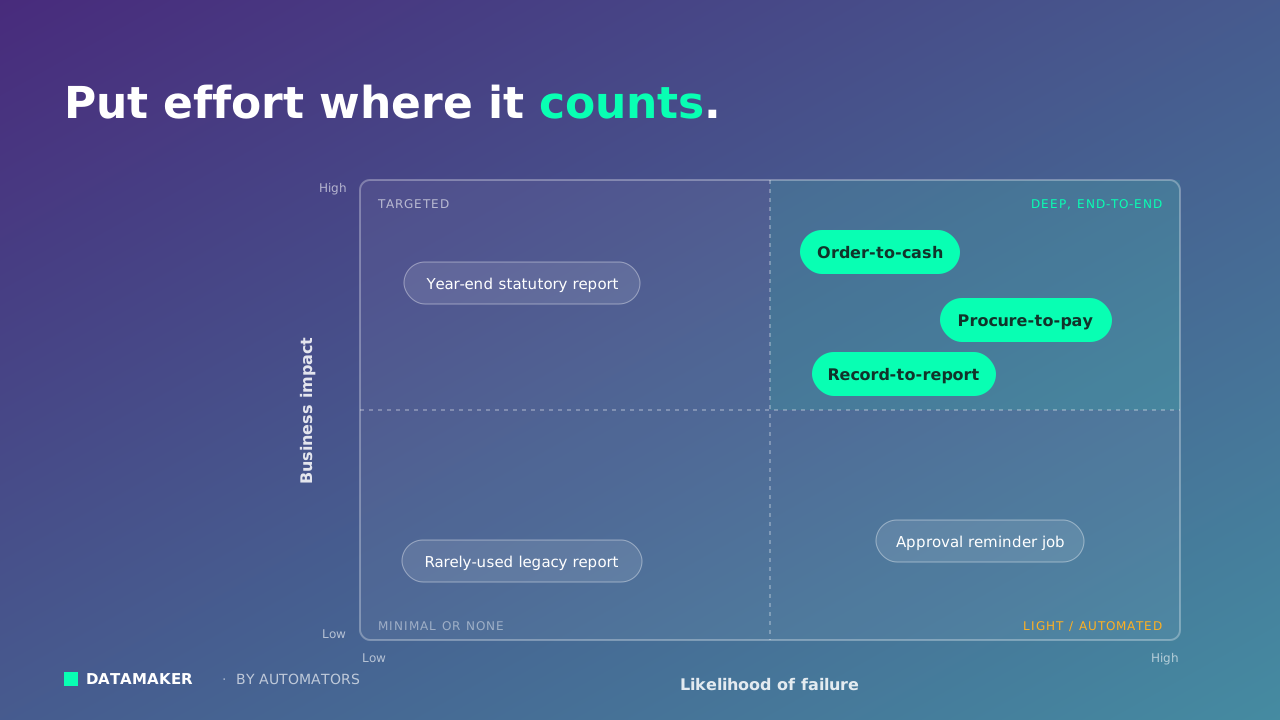
That is also the cleanest way to prioritize, which is what every test manager is really trying to do. Score your business processes on two axes. Impact: if this breaks, what stops? Revenue, a regulatory filing, a production line, payroll. Likelihood: how much has it changed, how complex is it, how often has it broken before.
Processes that score high on both are non-negotiable and earn deep, end-to-end coverage. Order-to-cash, procure-to-pay, and record-to-report usually land here, because that is where money and operations live. A rarely-touched internal report scoring low on both can take a light pass or none.
Scoping this way does something quietly powerful: it cuts effort without cutting safety. Every process you can honestly call low-impact and stable is effort you reclaim and redirect at the processes that can actually hurt you. That is not doing less testing. It is doing less of the testing that was never going to matter.
Step 3: Decide what you will deliberately not test
Here is the decision almost every strategy refuses to put in writing: the list of things you have chosen not to test.
You cannot test all of it, so you are already making this call. The only question is whether it is deliberate and visible or accidental and buried. Risk-based testing, the approach most mature teams now lean on, gets described as if it were free wisdom. It is not. It is a bet.
By design it accepts lower total coverage and a higher chance that a defect slips through somewhere you decided to skip. That can be precisely the right bet when time is finite. It is only defensible when it is conscious.
So make it conscious. Write down what is out of scope, the reason the remaining risk is acceptable, and the name of the person who agreed to carry it. An exclusion list with a signature is worth more than a coverage report, because it turns "we ran out of time" into "we made a decision."
When something does slip through in an area you deliberately deprioritized, that is a known accepted risk, not a surprise. Those are very different conversations to have with a steering committee.
There is a sharper version of this problem, and it is the one that bites hardest: the gaps you did not choose. Processes, integrations, and tools running in your landscape that never made it onto anyone's list. You can have a flawless exclusion list and still get blindsided by something you did not know was there.
A recent case from outside SAP makes the stakes plain. In May 2026, a Pennsylvania bank had to file a disclosure with the SEC, not over a hacker, but because an employee had been feeding customer data into an AI tool nobody had approved or even knew was running. It was reportedly the first SEC filing of its kind triggered by unsanctioned AI rather than an attack.
The principle carries straight over to testing: you can only test what you know exists, and the quiet, unsanctioned, undocumented corners of your environment are untested by definition. As SAP landscapes start absorbing AI features and agents, build a recurring step into the strategy that asks what is actually running here, so your scope tracks reality instead of an architecture diagram from two years ago.
Step 4: Decide where your test data comes from, and how it stays current
Ask a team to walk you through their strategy and you will hear about scope, environments, and automation. Ask where the test data comes from and you often get a pause. That pause is a real risk, and it usually stays invisible until late.
Test data gets treated as setup, a thing someone sorts out the week before execution. It is not setup. It is the ground everything else stands on. Bad data does not fail loudly.
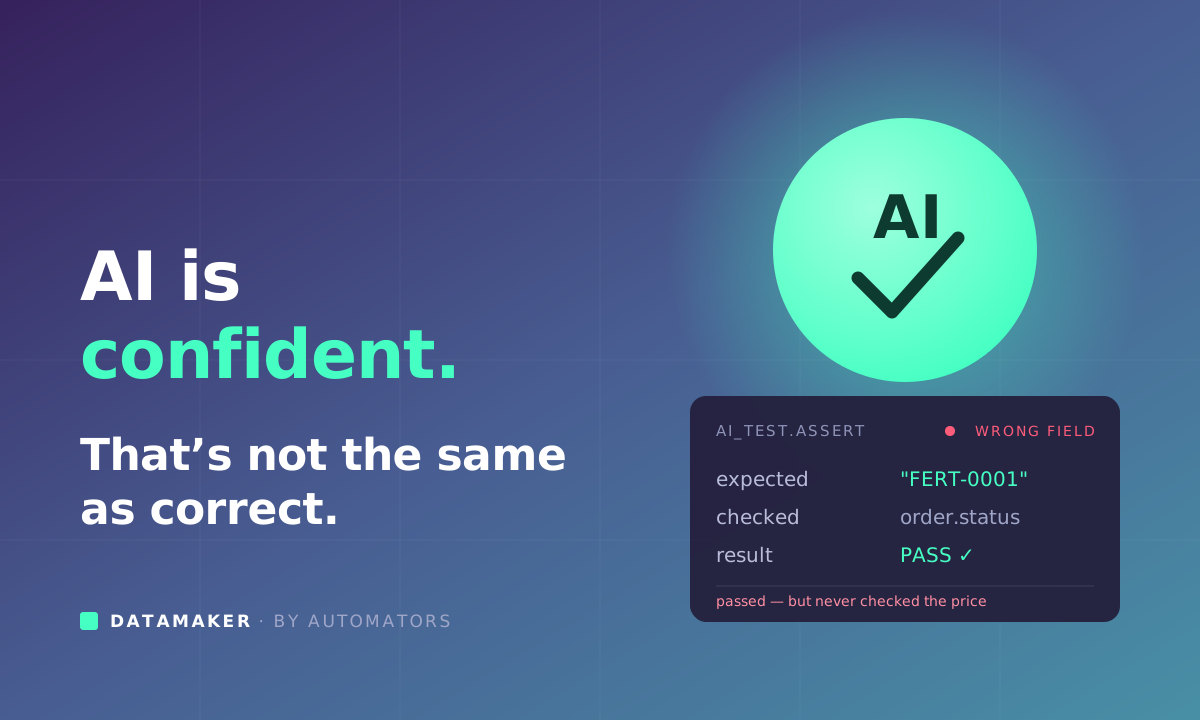
It produces tests that pass when they should fail, or fail for reasons that have nothing to do with the code, and either way you are now debugging your data instead of your system. A green run on bad data is worse than no run, because it hands you confidence you did not earn.
Two questions belong in the strategy itself, not on someone's prep checklist.
Where does the data come from? Copying production is the old reflex, and it drags real customer records into test systems, which is a privacy exposure you then have to chase down and mask. The alternatives are pulling targeted subsets of real data, or generating synthetic data that mirrors the shape and relationships of production without carrying the sensitive contents. Each trades off realism, effort, and risk differently. The strategy should name which one you are using, and why.
How does it stay current? Data is not a one-time load. Configuration shifts, processes change, and point-in-time data quietly drifts out of step with the system it is meant to represent, so you wind up testing a version of the landscape that no longer exists. You need a refresh approach, not just an initial pull.
Both questions point to the same conclusion: test data is its own discipline, not a side task, and at SAP scale it is usually worth a dedicated tool rather than hand-built scripts. Tools in this category pull real data or generate synthetic sets, apply masking, and load the result back into the system.
DataMaker, for example, can pull real data or generate synthetic test data, lets a team choose how each field is masked rather than forcing one blanket rule, and delivers the result into SAP through native OData. The specific tool is not the point. The point is that "where the data comes from and how it stays fresh" is a decision with a named owner written into the strategy, not something improvised under deadline.
Step 5: Sequence automation around stability, not ambition
Automation is where good intentions quietly turn into sunk cost. Under deadline the instinct is to automate as much as possible as fast as possible, and it fails in a way you can almost set your watch by.
The pattern: a team commits to automating everything at once, spends months building scripts, and the project ends, or the budget does, before the suite has run enough times to prove it was worth building. Leadership sees a large bill and no demonstrated return, and the next funding cycle quietly drops automation. The capability dies, not because it was a bad idea, but because it was run like a science project instead of an investment.
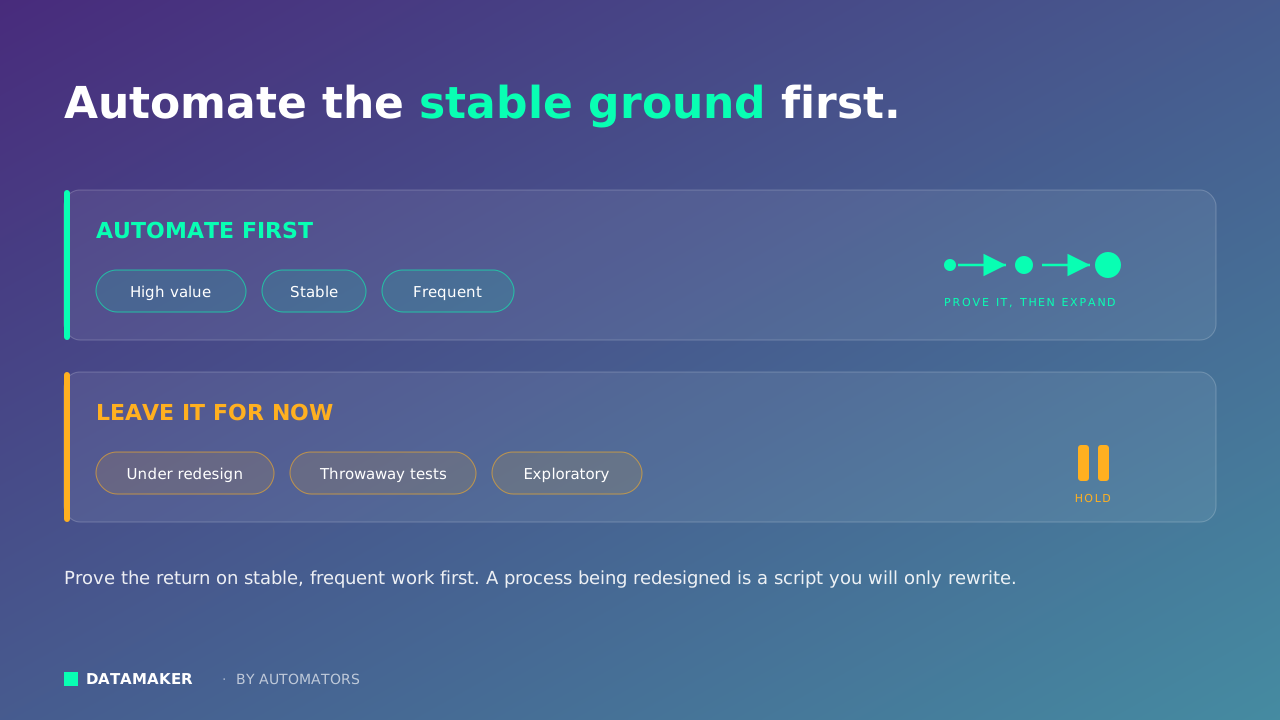
There is an SAP-specific version of this trap worth naming directly. During a transformation program, the processes most tempting to automate are often the ones being actively redesigned. A process mid-redesign in an S/4HANA migration is a poor automation candidate no matter which tool you buy, because you will be rewriting the scripts as fast as you build them. Automate the stable ground first and let the moving parts settle before you wire them down.
So sequence it like an investment. Start with a small set of processes that are high value, stable, and run often, the ones where a reliable automated regression pays for itself fast. Prove the return there, in numbers, then expand.
That early, visible payback is also the answer to the question every test lead eventually has to field, which is how you justify the automation spend at all. You justify it the way you justify any investment: smallest credible bet, measured return, then scale. "It is modern" convinces no CFO. "It cut our order-to-cash regression cycle from nine days to two" does.
And notice the order in all of this. You decided what to automate and why before anyone named a product. That is deliberate. The common mistake is to pick the tool first and let its strengths quietly redefine the strategy, so you end up testing what the tool is good at instead of what the business needs verified. Decide the shape of the work, then choose the tool that fits it.
Step 6: Test to find failure, not to confirm success
This step is a mindset, and it quietly governs the other six.
There are two ways to run a test effort, and on a status report they look nearly identical. One is built to confirm the system works. The other is built to find where it breaks. They end up in opposite places.
The confirmation mindset is seductive because it feels like progress. More scripts, more coverage, more execution hours, a wall of green ticks climbing day over day. It reads as diligence. But volume is not insight, and a thousand passing tests can describe a system that was simply never pushed hard enough to reveal where it gives way. You finish with a dashboard that radiates confidence and a system nobody actually tried to break.
The failure-finding mindset is less comfortable and far more useful. It goes hunting for the risky seams, designs tests specifically to make them fail, and treats a defect caught before go-live as a win rather than bad news. It is the difference between a green light that proves a process is correct and a green light that has only ever seen the happy path. A test that cannot fail is not testing anything.
Your strategy can tilt the culture toward the second one. Measure defects found before go-live, not pass rates. Build cases around the realistic ways a process breaks: the rejected invoice, the partial delivery, the currency that rounds the wrong way, not just the clean run. The teams that sleep the night before go-live are the ones who spent the project trying to break their own system and ran out of ways to do it.
Step 7: Put it all on one page
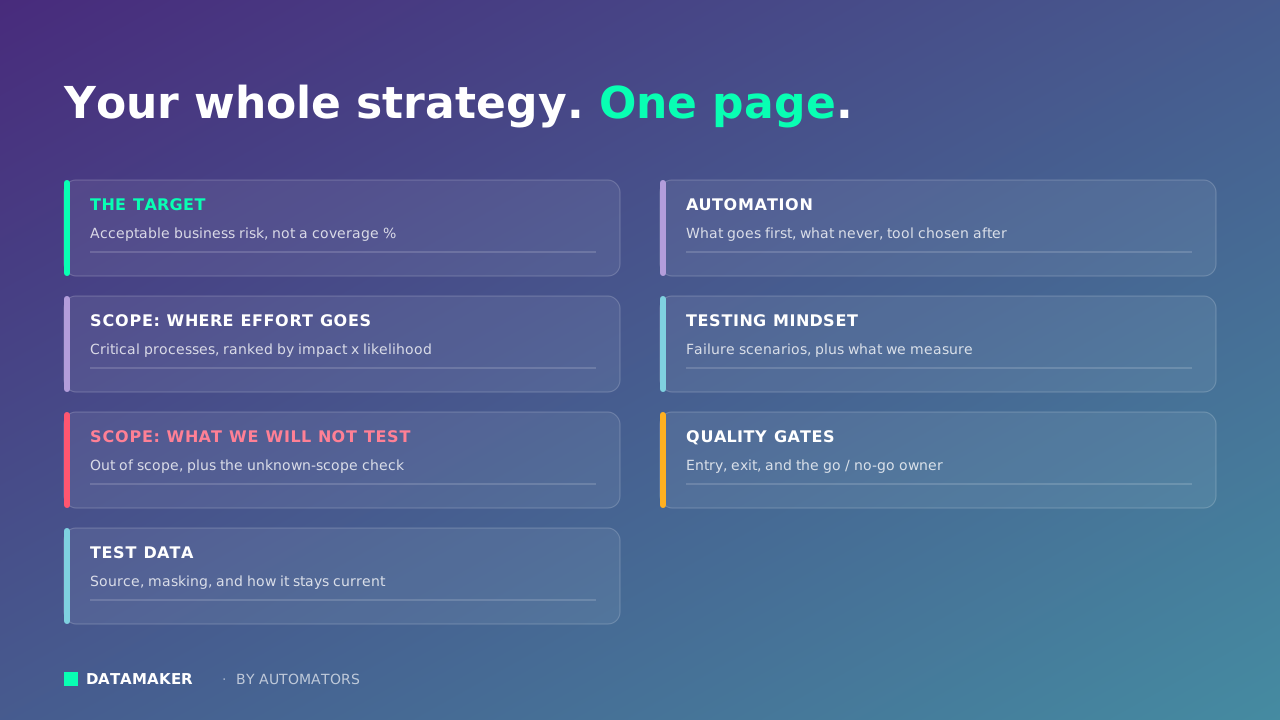
None of this needs forty pages. It needs one page that drags every decision into the open, with an owner and a reason beside it. The heavier frameworks still have their place, SAP Activate's templates and the rest organize the detail well, but they sit underneath these decisions, not in front of them. Detail is worthless if the choices above it were never actually made.
Copy this into a doc and fill in every line. Any blank you cannot fill is a gap in your strategy that you have just caught before the project caught it for you.
SAP TEST STRATEGY: ONE PAGE
Project / release: __________ Owner: __________ Date: __________
THE TARGET
Acceptable business risk we are aiming for (not a coverage %): __________
SCOPE: WHERE EFFORT GOES
Critical business processes, ranked by impact x likelihood: __________
Coverage depth for each: __________
SCOPE: WHAT WE WILL NOT TEST
Deliberately out of scope: __________
Why the remaining risk is acceptable: __________
Check for unknown scope (undocumented tools / AI / integrations): __________
Accepted and signed by: __________
TEST DATA
Source (production copy / real subset / synthetic / mix): __________
Why this source: __________
Masking and privacy approach: __________
How data stays current through the project: __________
Owner: __________
AUTOMATION
First processes to automate (high value, stable, frequent): __________
Expected return that justifies it: __________
Will NOT automate, and why: __________
Tool chosen after deciding the above: __________
Owner: __________
TESTING MINDSET
Realistic failure scenarios we will test, beyond the happy path: __________
What we measure (defects found, not just pass rate): __________
QUALITY GATES
Entry criteria: __________
Exit criteria: __________
Go / no-go owner: __________
Final Words
A test strategy is not a document you finish. It is a set of decisions you make on purpose: what "enough" means, where effort goes, what you refuse to test, where your data comes from, what you automate first, and whether you are hunting for failure or collecting green ticks. The document only records them.
And in an environment this upgrade-heavy, it is never finished for good. Treat it as a living capability you reopen at each support pack and migration, not an artifact you file once.
Start with the one-pager. Fill in the target line today, then work down step by step. The blanks you cannot fill are your real strategy, and they are far cheaper to find now than in UAT.